Carpathian Spring: Wildflowers and Trails
The Carpathian Mountains in spring are a land of dramatic dualities. While the jagged peaks of the Chornohora range might still be cloaked in winter white, the valleys below are rapidly transforming into a vibrant tapestry of purple and gold. This "shoulder season," typically spanning from late March to early June, is the most visually poetic time to visit Eastern Europe's great mountain arc. For hikers and nature lovers, the Carpathian spring offers a front-row seat to the "awakening." It is a season where you can start your day trekking through muddy forest paths and end it standing amidst a million crocuses, with the scent of wet pine and thawing earth filling the air.
The Purple Tide: The Crocus Bloom
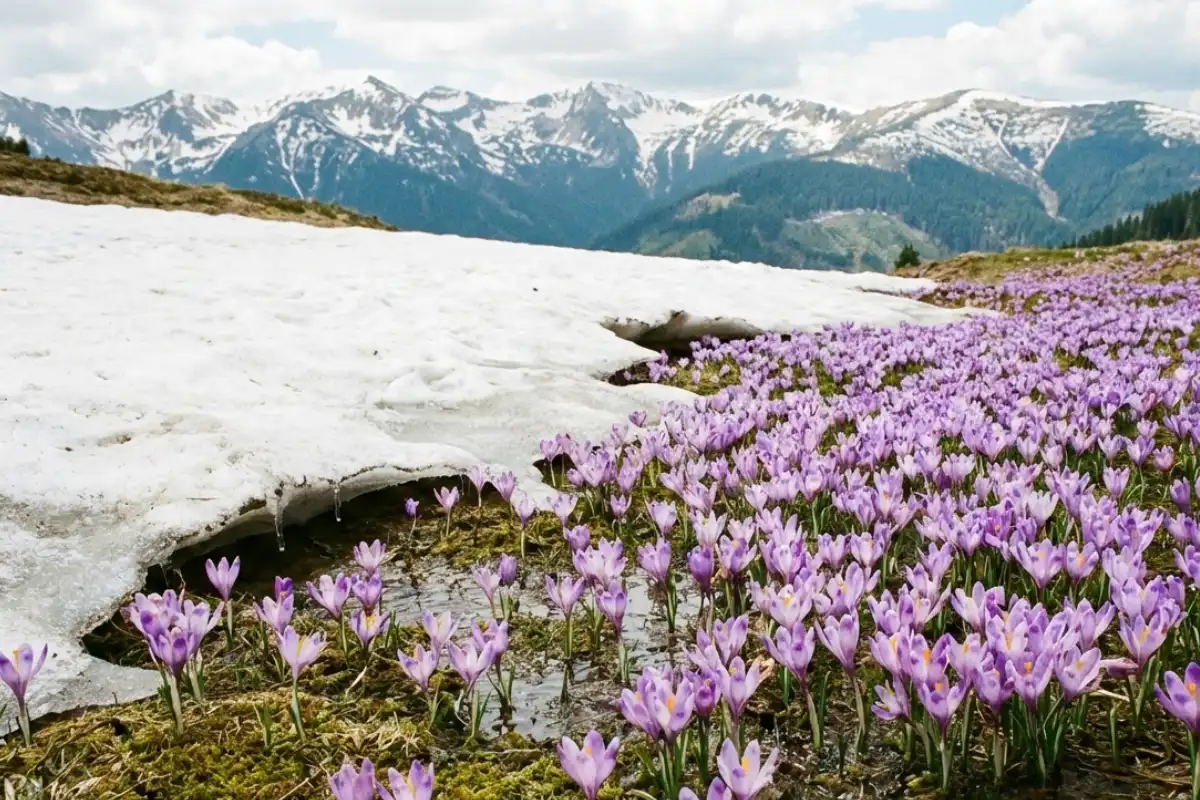
The most sought-after sight in the Carpathians is the blooming of the Crocus heuffelianus. These resilient flowers emerge directly through the thinning snow, often covering entire mountain slopes in a violet haze.
- **The Valley of Crocuses (Kolochava):** This village in the Zakarpattia region becomes a pilgrimage site in late March. The local open-air museum provides a stunning historical backdrop for the bloom.
- **Dragobrat and Dzembronya:** For those who prefer a wilder setting, the high-altitude meadows (polonynas) near these areas bloom later, usually in mid-to-late April.
- **White Narcissus:** By May, the focus shifts to the Valley of Narcissi near Khust, where one of the world’s last wild populations of narrow-leafed narcissus creates a fragrant white sea.
Photographers on local hiking forums recommend arriving at sunrise. “The way the morning frost clings to the petals before the sun melts it creates a diamond-like shimmer that you just can’t capture at midday,” suggests a regular Carpathian trekker.
Navigating the Thaw: Trail Realities
Spring hiking in the Carpathians requires a different mindset than summer trekking. The trails are in a state of flux, and the mountains are at their most unpredictable.
The Mud and the Mist
Expect “Gorgany” (the rocky sections) to be slippery. The melting snow creates “smereka” (spruce) forests saturated with moisture. Specialized outdoor journals note that the lower trails are often muddy, while the ridgelines may still harbor dangerous cornices of snow.
Pro-Tip: Footwear and Gaiters
Experienced Carpathian hikers on r/HikingUkraine emphasize one piece of gear above all: waterproof gaiters. They prevent mud and slush from entering your boots when you’re navigating the swampy forest sections that precede the beautiful alpine meadows. Without them, your feet will be soaked within the first hour.
Wildlife Awakening: A Quiet Spectator
As the snow melts, the Carpathian fauna becomes more active. This is the time when brown bears emerge from hibernation and red deer move to lower pastures to graze on the fresh green shoots. While sightings are rare, spring is also the best time for birdwatchers to spot the rare black stork or the Ural owl in the ancient beech forests.
Frequently Asked Questions About Carpathian Spring
When is the absolute best time to see the crocuses?
It varies by year, but generally, the last week of March for the valleys (like Kolochava) and the middle of April for the higher meadows (like Dragobrat). Keep an eye on local social media groups for “bloom reports” starting in early March.
Is it safe to hike Mount Hoverla in May?
May is a tricky month for Hoverla. The summit can still have significant snow and ice, while the base is warm. Crampons or at least trekking poles with snow baskets are often necessary. Always check the weather forecast at the Zaroslyak base camp before ascending.
What is “mountain spring weather” like here?
Expect everything. It is common to experience 15°C sunshine, heavy rain, and a sudden snow squall all in the same afternoon. Layering with wool and a high-quality hardshell is essential.
Are the mountain huts (Kolybas) open?
Most commercial huts and guesthouses are open year-round. However, the high-altitude shepherd huts (kolybas) are usually empty in spring, as shepherds don’t move their flocks to the polonynas until late May or early June.
Are there ticks in the Carpathians in spring?
Yes. Spring is the start of tick season in the forest zones. Use repellent, wear long sleeves, and perform thorough checks after every hike, especially when walking through tall grass or ferns.
Conclusion: Embracing the Wild Thaw 🌸🏔️
The Carpathian spring isn’t for those who demand manicured paths and guaranteed sunshine. It is for the traveler who finds beauty in the struggle of a flower pushing through ice and the raw power of a mountain stream in full flood. By preparing for the mud and respecting the lingering winter at the summits, you gain access to a version of the mountains that feels profoundly alive and intensely private. The Carpathians don’t just bloom in spring; they exhale.
Would you like me to help you map out a 3-day wildflower itinerary or check the historical bloom dates for a specific Carpathian peak?