Berchtesgaden: Skiing with Bavarian Flair
Berchtesgaden, nestled in the heart of the Bavarian Alps and home to a stunning National Park, offers a unique blend of traditional German culture, historical sites, and family-friendly skiing. It provides an excellent, more affordable alternative to the premium Austrian and Swiss resorts. This 2025 guide details essential strategies for finding affordable lodging, enjoying budget Bavarian cuisine, utilizing the crucial **Guest Card** for free transport, and maximizing your skiing and cultural experience.
1. Bavarian Bargains: Budget Accommodation & Hostel Costs (2025)
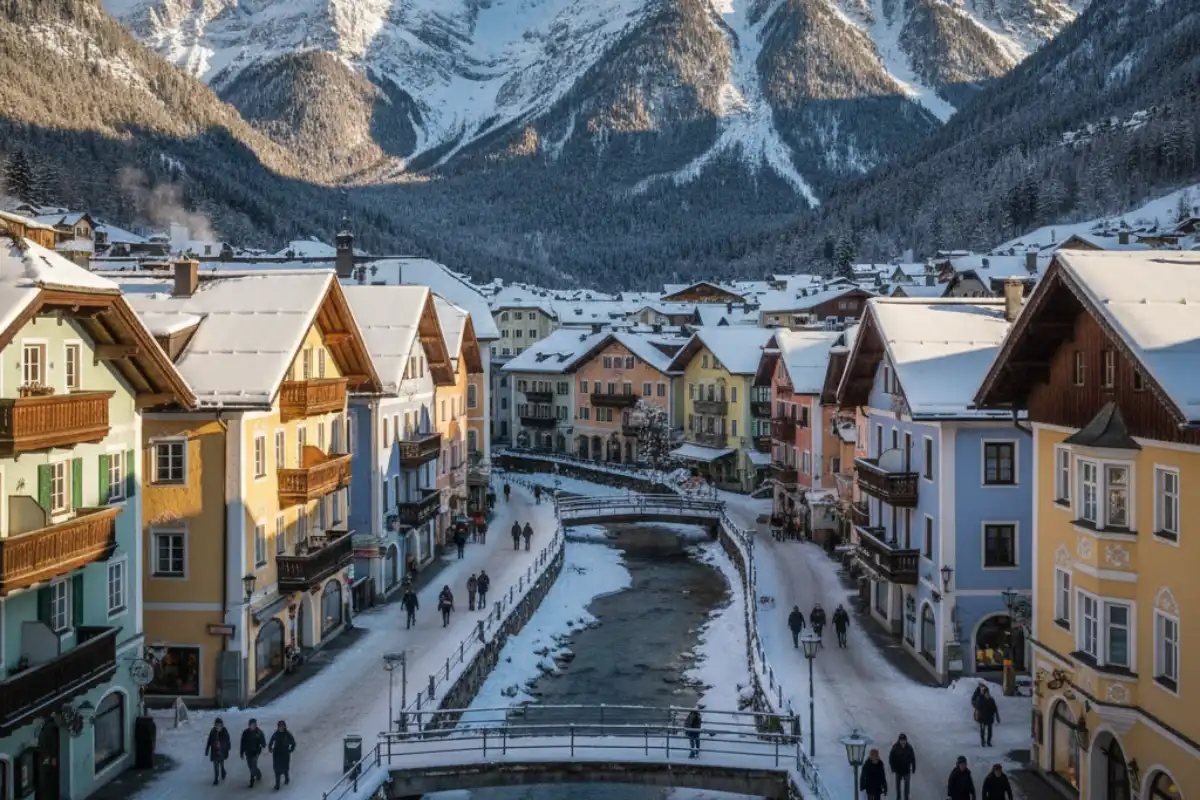
Lodging here often takes the form of *Pensionen* (guesthouses) or *Ferienwohnungen* (holiday apartments). True large hostels are available but less common. The key is to stay slightly outside the main town center or in a neighboring village.
Hostel & Budget Accommodation Prices by Area (Average per night, December 2025) – All Prices in Euro (€)
| Area/Neighbourhood | Description | Average Price (EUR/night) | Budget Focus |
|---|---|---|---|
| **Berchtesgaden Town Centre** | Closest to shops, restaurants, and the train station. Highest prices. | **€35 – €55** (Hostel Dorm Bed / Basic Pension) | Minimal hostel options; look for single rooms in smaller *Pensionen*. |
| **Schönau am Königssee** | Village near the famous lake, slightly further from Berchtesgaden town. | €30 – €50 (Guesthouse / Private Room in *Ferienwohnung*) | Excellent value; well-connected by the free bus system. |
| **Ramsau / Bad Reichenhall (Outskirts)** | Further away, quieter, and focused on hiking/cross-country. Bad Reichenhall has a train link. | €28 – €45 (Guesthouse / Hostel Dorm Bed) | **Ultimate Budget Hack:** Lowest prices and stunning scenery; requires using the free bus. |
2. Sustenance: Affordable Bavarian Cuisine and Pub Grub
Eating affordably means embracing traditional Bavarian cuisine (which is hearty and filling) and utilizing local grocery stores (Edeka, Aldi, Lidl) found in the valley.
Estimated Budget Food Costs (December 2025)
- **Supermarket Groceries (1-day self-catering):** €10 – €20 (Groceries in Germany are generally cheaper than in Austria or Switzerland).
- **Budget Lunch (e.g., Leberkäse/Bratwurst):** €5.00 – €10.00 (Grab a meatloaf sandwich (*Leberkäse-Semmel*) or a sausage (*Bratwurst*) from a local butcher or street stand).
- **Cheap Dinner Option (e.g., Simple Gasthaus Meal):** €15 – €25 (A traditional meal like *Schnitzel* or a large plate of *Käsespätzle* (cheese noodles) at a *Gasthaus*).
- **Beer (Local *Helles*):** €3.50 – €5.00 (Often cheaper than soda or juice).
- **Estimated Daily Budget for Food (Self-Catering Focus):** €30 – €45.
3. Activities and Entertainment Costs (Skiing & Sightseeing)
The Berchtesgaden region offers several smaller, distinct ski areas (Jenner, Hochschwarzeck, Rossfeld). This is ideal for families and casual skiers, though terrain is limited compared to mega-resorts.
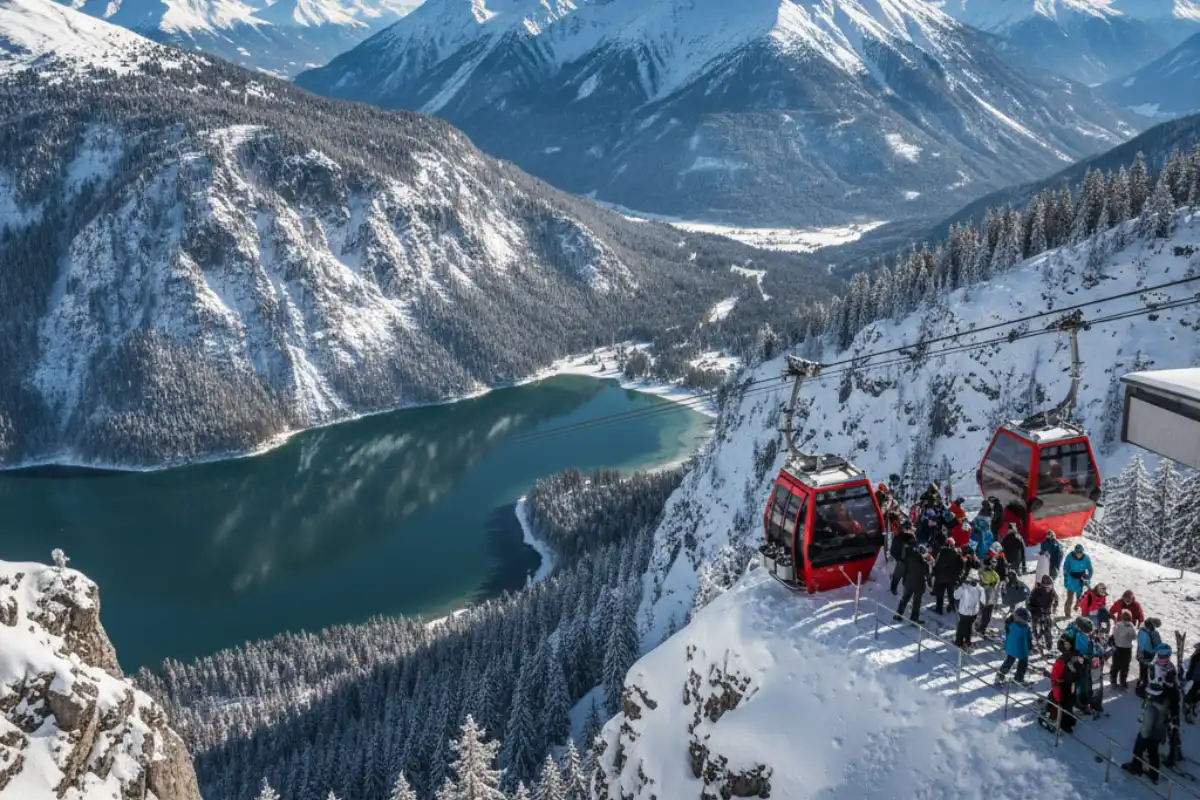
- **Jenner Day Lift Pass (The Main Area):** Approx. **€45 – €55**.
- **Lift Pass Hack: The Berchtesgaden Ski Pass:** Purchase the regional pass, which covers several smaller areas, making it better value if you plan to ski more than one location.
- **Ski/Snowboard Rental (Standard Kit, 1 Day):** Approx. **€30 – €45** (Affordable due to the family focus of the resort).
- **Budget Sightseeing:** Entry to the **Berchtesgaden National Park** and the **Königssee lake** area is completely **FREE**. Hiking and walking the trails are the best free entertainment.
4. Getting Around: The Magic of the Gästekarte
The local transportation system, provided by RVO, is efficient and covers the entire region. The key budget advantage is the **free Guest Card**.
Free Public Transport for Tourists:
- **RVO Bus Network:** The local RVO buses connect Berchtesgaden town, Schönau am Königssee, Ramsau, and all main ski and sightseeing points (like the Salt Mine). This service is entirely **FREE** for anyone presenting their official **Gästekarte** (Guest Card).
- **Train Travel (Partial):** The Guest Card may offer discounts on local train travel, but the buses are generally the most convenient and cheapest option.
5. Safety in Berchtesgaden: Dangers and Scams (2025)
The Berchtesgaden region is extremely safe. The primary risks are environmental, related to mountain activities, and historical sites.
Key Dangers for Tourists:
- **Mountain Hiking/Skiing:** Even on marked winter trails, conditions can be icy. Wear appropriate footwear and respect all trail closure signs, especially in the National Park.
- **Icy Roads (Driving):** If renting a car, ensure it has **winter tires (M+S or Alpine symbol)**, as required by German law in winter conditions. Driving mountain roads can be challenging.
Criminal risks are negligible. There are no ‘no-go’ areas; the entire area is family-friendly and safe.
- **Historical Sensitivity:** Some historical sites (e.g., Kehlsteinhaus/Eagle’s Nest area) carry heavy historical significance related to WWII. Be respectful and mindful of local sensibilities.
- **Petty Theft:** Extremely rare, but standard precautions should be taken in crowded areas like the train station or the main square during market times.
Your greatest danger is slipping on ice or underestimating the mountain terrain, not crime.
6. Insider Tips for an Epic, Positive Berchtesgaden Trip
- **Do the Königssee Trip:** Use your free bus pass to visit the stunning Königssee (King’s Lake). Take the electric boat across the lake to St. Bartholomä. While the boat ride is paid, the scenery is worth the cost, and the bus is free.
- **Visit the Salt Mine:** The **Salzbergwerk Berchtesgaden** is a fun, unique activity, involving riding a small train and slide underground. Book tickets online to save time.
- **Enjoy the *Brotzeit***: Skip a formal dinner and enjoy a traditional Bavarian *Brotzeit* (a simple meal of bread, cheese, smoked meat, and pickles) at a *Gasthaus* or, even cheaper, assemble your own from the local butcher/baker.
- **Cross-Border Hop:** Take the train or bus across the border (near Bad Reichenhall) to visit **Salzburg, Austria**. The beautiful city is only a short (paid) bus ride away and provides a great day trip.
7. Essential Berchtesgaden Travel FAQs (December 2025)
Is the Berchtesgaden area suitable for expert skiers?
Berchtesgaden is best suited for beginners and intermediate skiers. While the **Jenner** area offers some steep challenges, experts seeking massive, high-speed terrain might prefer larger Austrian resorts nearby.
How do I get to Berchtesgaden from Munich?
The cheapest way is the **regional train (BRB)** from Munich to Freilassing, and then a change to the local train connecting to Berchtesgaden Hauptbahnhof (Hbf). The journey takes around 2.5 to 3 hours.
How does the free Gästekarte (Guest Card) work?
You receive the card from your accommodation provider upon check-in (after paying a small local tourism tax). It provides free, unlimited use of the RVO bus network in the region for the duration of your stay.
Is the Eagle’s Nest (Kehlsteinhaus) accessible in winter?
No. The Kehlsteinhaus is typically **closed in winter** due to severe weather and snow, usually from late October/early November until early May. However, the documentation center is generally open year-round.
Is English widely spoken?
English is generally well understood in hotels, tourist offices, and main restaurants. However, learning a few basic German phrases (*Danke, Guten Tag*) for use in smaller guesthouses and local shops is always appreciated.
Ready to experience the charm and affordability of the Bavarian Alps? Start planning your budget Berchtesgaden adventure today!
Find Affordable Berchtesgaden Guesthouses Now